01 / Foundation
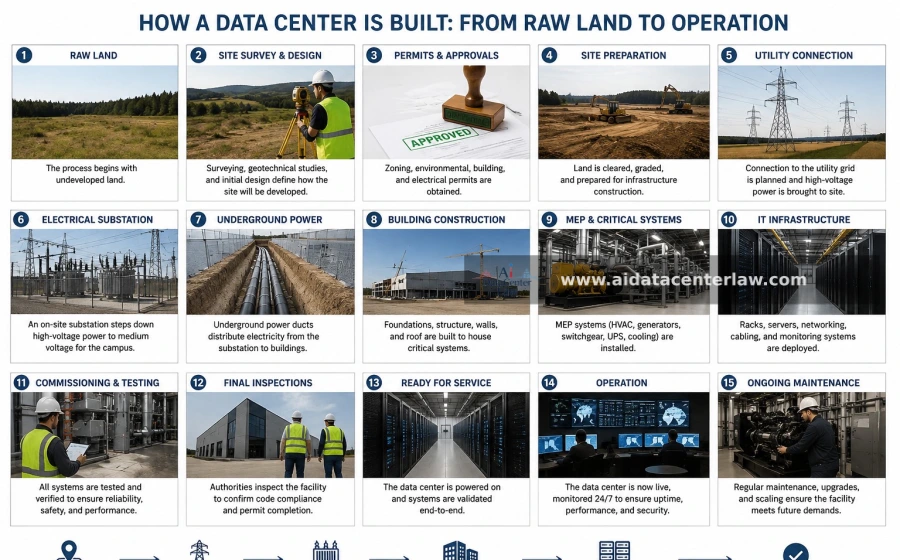
How a data center is built
The complete route from raw land to operation.
Read one infrastructure problem through two institutional settings. Short notes connect legal concepts, project lifecycles and comparative method.
Updated 17 November 2026. Start with the public grid boundary: CAISO's filed large-load tariff clarifies who studies a new 50 MW-plus load, while Jilin's trial plan places the internal network, renewable resources, settlement and interruption risks in a project-lead structure. These are different legal mechanisms for identifying the duty bearer.
Then move from law to contract. Kentucky Power and TeraWulf disclose a large-load service package with proposed residential bill credits, collateral and generation carrying charges. Google–Voltus offers a contrasting route: procure distributed flexibility across the grid instead of building one dedicated power plant.
Finally, examine the limits. The Muskie and Indiana nuclear campuses remain planned. TeraWulf's Anthropic leases and Google credit support are financing instruments, not evidence of completed energy delivery. The new EU risk-regulation article supplies a comparative framework linking information duties, cost causation and system resilience.
Start with the site. Follow the power. Then follow the capital. These conceptual learning diagrams describe common structures; a specific project’s documents determine its actual arrangements.
01 / Foundation
The complete route from raw land to operation.
02 / Foundation
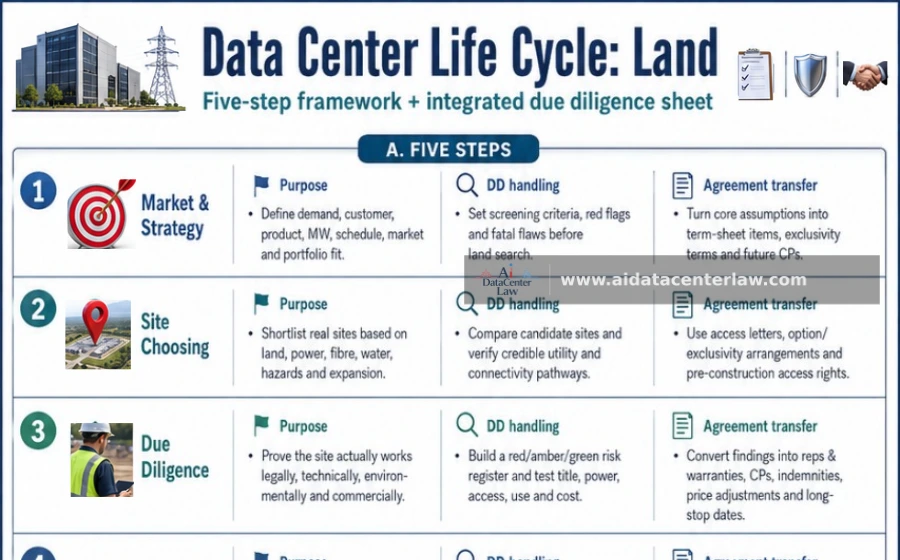
Connect site selection and diligence findings to the agreements that secure a buildable site.
03 / Power
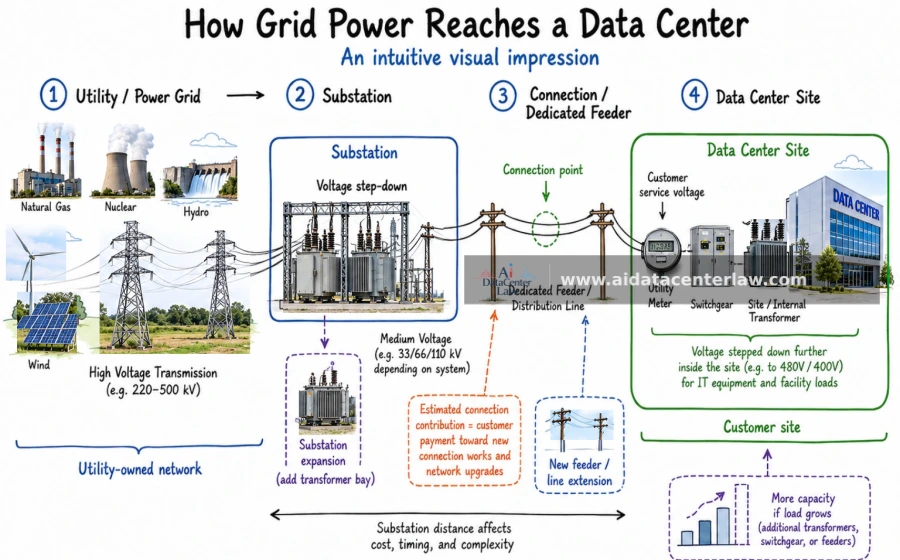
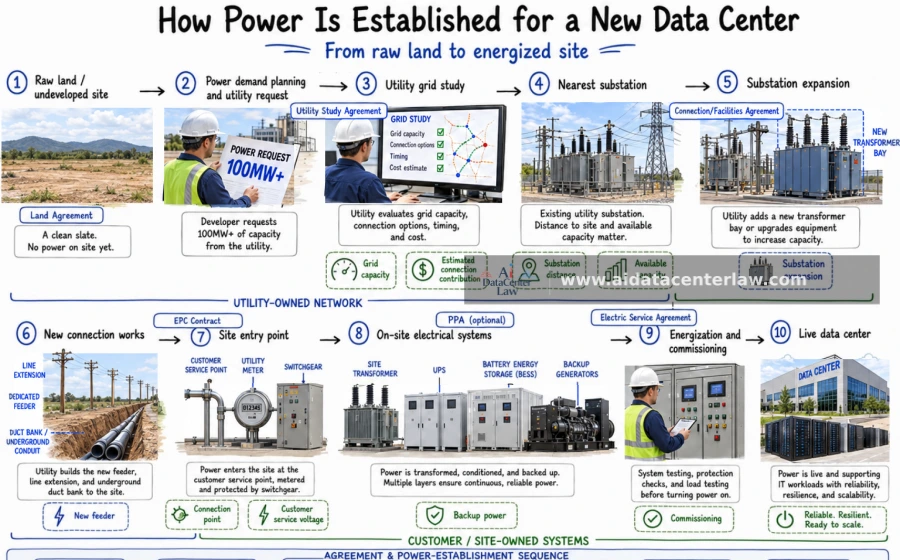
Follow the physical path from generation and transmission to the customer connection.
04 / Power
Utility studies, connection works, site systems and energization, read alongside the agreement sequence.
05 / Capital
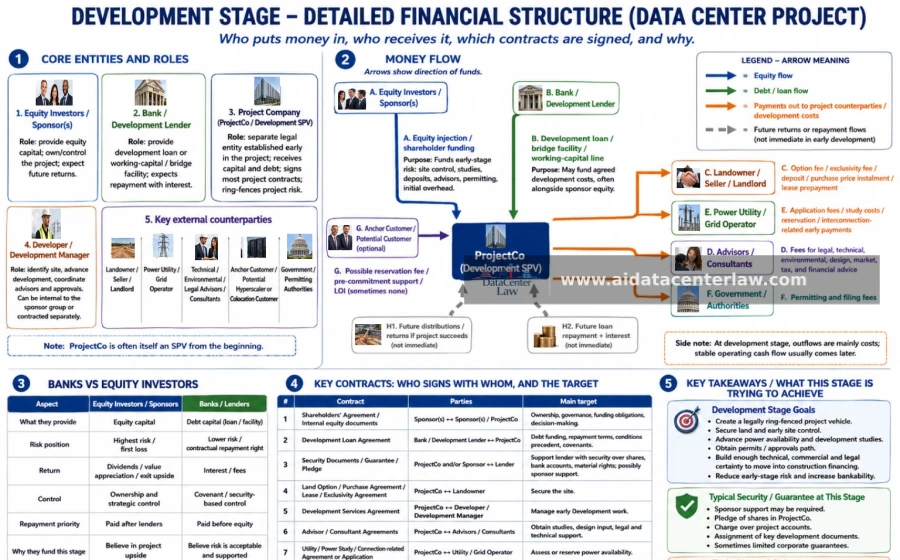
Who funds early-stage work, which counterparties receive payment, and what makes a project financeable.
06 / Capital
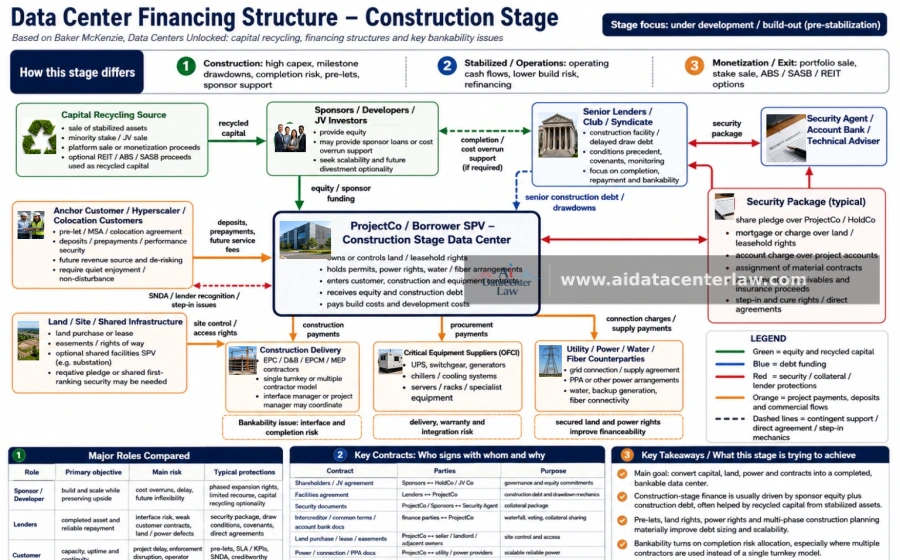
Completion risk, drawdowns, security and the contracts that turn capital into an operating asset.
07 / Capital
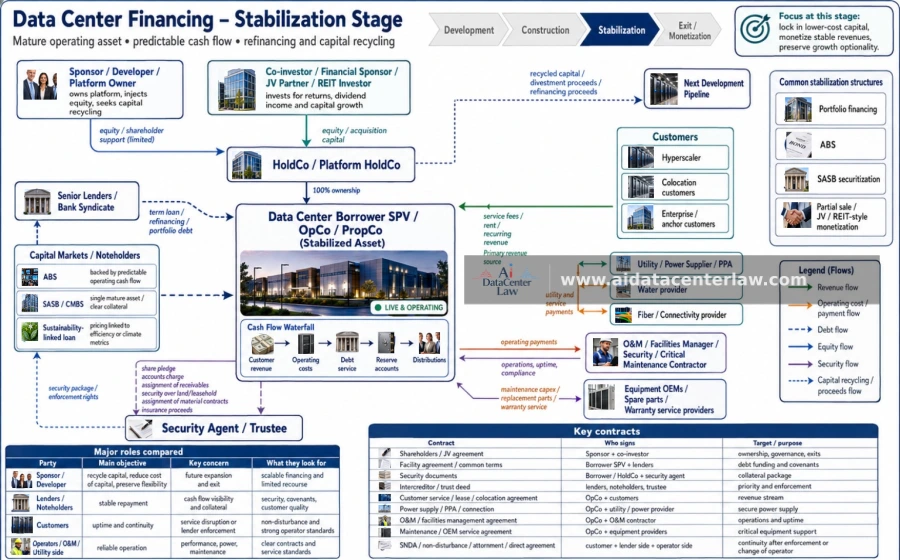
Operating cash flow, refinancing, customer contracts and lender security.
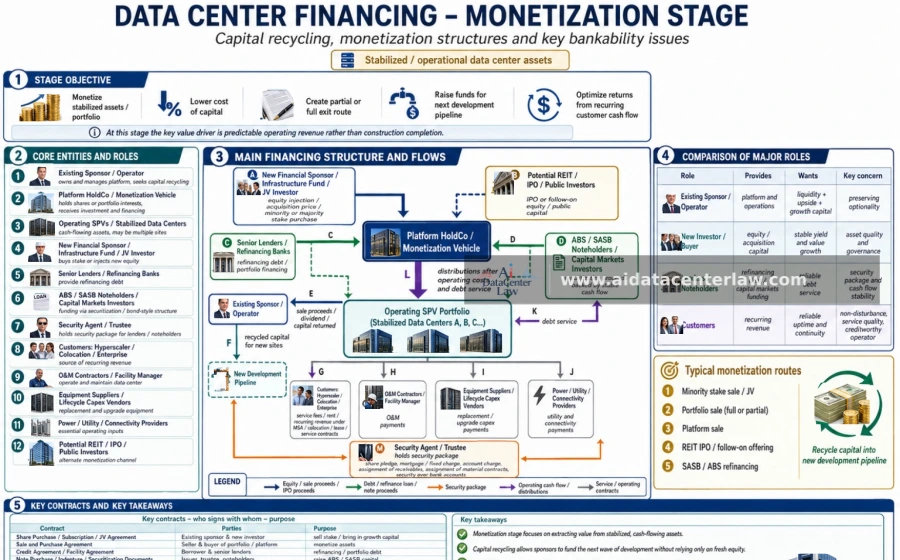
08 / Capital
Portfolio sales, joint ventures, REITs and securitization as routes to release capital.
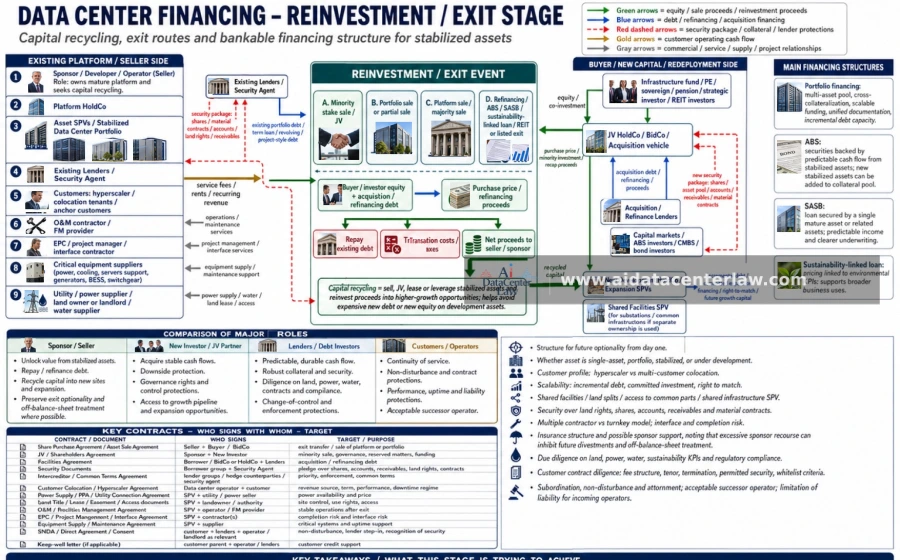
09 / Capital
Trace sale and refinancing proceeds into repayment, distributions and the next development cycle.
A considered note on the infrastructure that makes intelligence possible. A research summary every other Wednesday, after editorial review.
One argument. Three developments worth reading. New research, original documents and corrections—with the evidence attached.
Subscribe by email →RSS / Email ↗Leave your email to receive the reviewed summary. Prefer a feed reader? The RSS feed is available on the subscription page.
Commentary
ENERGY, COMPUTE & INSTITUTIONSSeven readings trace the infrastructure behind AI: fuel, diplomacy, material supply chains, energy security, nuclear siting, natural gas and the distribution of local benefits.
Diesel exports: the fuel-security question behind digital resilience
A ban intended to lower domestic fuel prices can change the incentives that sustain supply. For data centers, the connection runs through backup power, replenishment and priority access during a crisis.
Source: Foreign Policy5–7 min · September 29, 2026Read more →Energy diplomacy beneath the competition for compute
Diesel, coal and the absence of electric vehicles from the formal agenda reveal different layers of US–China energy relations. The implications for AI infrastructure lie in the conversion of resources into dependable computing capacity.
Source: Columbia Center on Global Energy Policy5–7 min · October 2, 2026Read more →The material supply chains behind the electric data center
China’s clean-technology manufacturing strength does not remove its exposure to oil-derived inputs, processing chemicals and shipping routes. The same distinction matters for the equipment that makes data centers possible.
Source: Columbia Center on Global Energy Policy5–7 min · October 1, 2026Read more →Energy optionality: the value of having another route
Redundant infrastructure, inventories and alternative sources can appear costly in normal times. A crisis reveals their option value—and asks who has paid to retain it.
Source: Goldman Sachs Global Institute6–8 min · October 1, 2026Read more →Nuclear campuses and the data center as an anchor tenant
Combining difficult-to-site nuclear facilities with investment, research and large electricity demand may change a host community’s proposition. The legal challenge is to turn a package of promises into durable obligations.
Source: Columbia Center on Global Energy Policy5–7 min · September 30, 2026Read more →Can data sovereignty create gas demand?
A prospective wave of LNG supply may confront weak traditional demand. The possibility that locally required computing capacity could support higher-cost gas links data governance to energy investment.
Source: Columbia Energy Exchange5–7 min · September 29, 2026Read more →Beyond who pays: who shares the infrastructure dividend?
The Codelco–SQM lithium arrangement shows how revenue, proximity, representation and future generations can enter benefit-sharing design. Its relevance to data centers is an institutional analogy, not a directly transferable legal template.
Source: Columbia Center on Global Energy Policy6–8 min · September 28, 2026Read more →